Xin chào! 3-months Vietnam overview
After dozens of messages from friends along the lines of "So, how’s Vietnam?", I’m finally finding the strength to share my experience! In the two and a half months I've been here, I’ve fully completed my adaptation phase, ridden a scooter across half the country, and I think it’s finally time to share my impressions.
Right now, I’m living in Da Nang—a small city by Vietnamese standards, located by the sea, right in the middle of this country that stretches along the meridian. I hope that after reading this, you'll feel like coming for a visit (just kidding, don't come, there’s no room here as it is!)
Original version (ru): https://khitov.com/xin-chao-3-miesiatsa-vo-vietnamie/
How I ended up here
Actually, I didn't plan on going to Vietnam. If you read my first article, you’ll remember that for the past year, my planning horizon hasn’t exceeded a single day. Choosing a new place to live was no exception. Total trust in the bloggers who hyped up Da Nang as the best city on the planet. Well, if they say so, why not give it a shot.
Moving from Koh Samui (an island in Thailand) cost a few hundred dollars and 22 hours of travel. Ferry, buses, two flights—more time was spent waiting for the next connection than actually moving. And, for some unknown reason, an hour and a half of waiting in a massive crowd at the Da Nang airport. By pure chance, I was standing in the passport control line surrounded by Italians, and I got flashbacks of the line for St. Peter's Basilica in the Vatican—just as crowded, noisy, and hot!
A visa for Ukrainians costs $30, is obtained by filling out a form on a website, and is granted for up to 90 days. There’s no more convenient alternative here, unlike in Thailand, for example, where you can get a 5-year visa if you have a certain amount of money in your account. Here, though, you have to do a visa run every 90 days (~$100 + a trip to a neighboring country and back). Those who live here permanently are used to the process. My first visa run is coming up in just two weeks.
Why not the capital
In Vietnam, there are two truly major cities:
- Hanoi (the capital in the north): 5–8 million people.
- Ho Chi Minh City (the city in the south): 10–14 million people.
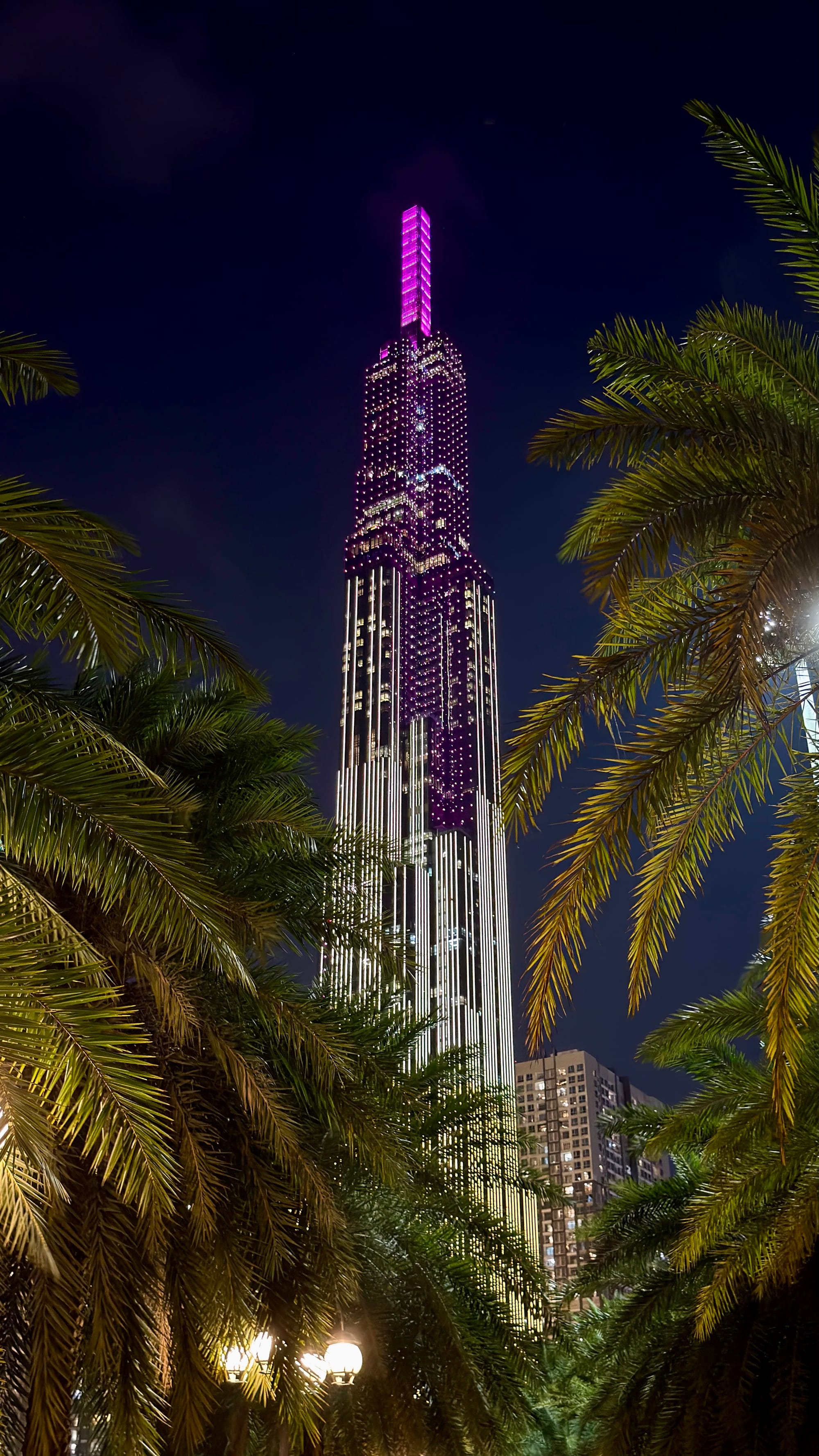
I recently visited Ho Chi Minh City. Naturally, I hadn’t read a thing about it, just like any other place I travel to. Within the first few minutes, everything became clear. It’s an absolute anthill in terms of its scale and the chaos happening there. Because of the sheer volume of traffic (there’s a bike for every Vietnamese person, which means 10 million bikes in one city!), getting from point A to point B without stress is only really possible by taxi. There are so many people that if you meet someone for the first time, you’re likely meeting them for the last time, too. Sure, there are beautiful locations, skyscrapers, atmospheric narrow streets, and tens of thousands of places to eat, but it’s all just "too massive."
I haven’t been to Hanoi yet. They say it’s much calmer and more conservative—while nightlife in Ho Chi Minh City goes on until morning, Hanoi sleeps at night. But again, millions of bikes on the streets—the city is just excessively big.
After Thailand (excluding Bangkok), Da Nang looked like a metropolis to me. Compared to Ho Chi Minh City, Da Nang is like a small town. Но it’s very cozy here. All the amenities are within a 15-minute bike ride. You don't get overwhelmed by the sheer number of places, so you grow attached to your favorites. You’re constantly bumping into people you know on the main streets.
And the nature, of course! An hour's drive takes you to mountain roads with waterfalls. Rice fields, rivers, and forests. 10 minutes from my house is the Son Tra Peninsula with its gorgeous sunsets and monkeys. 5 minutes from home are kilometers of stunning beach where you can even surf.
Community
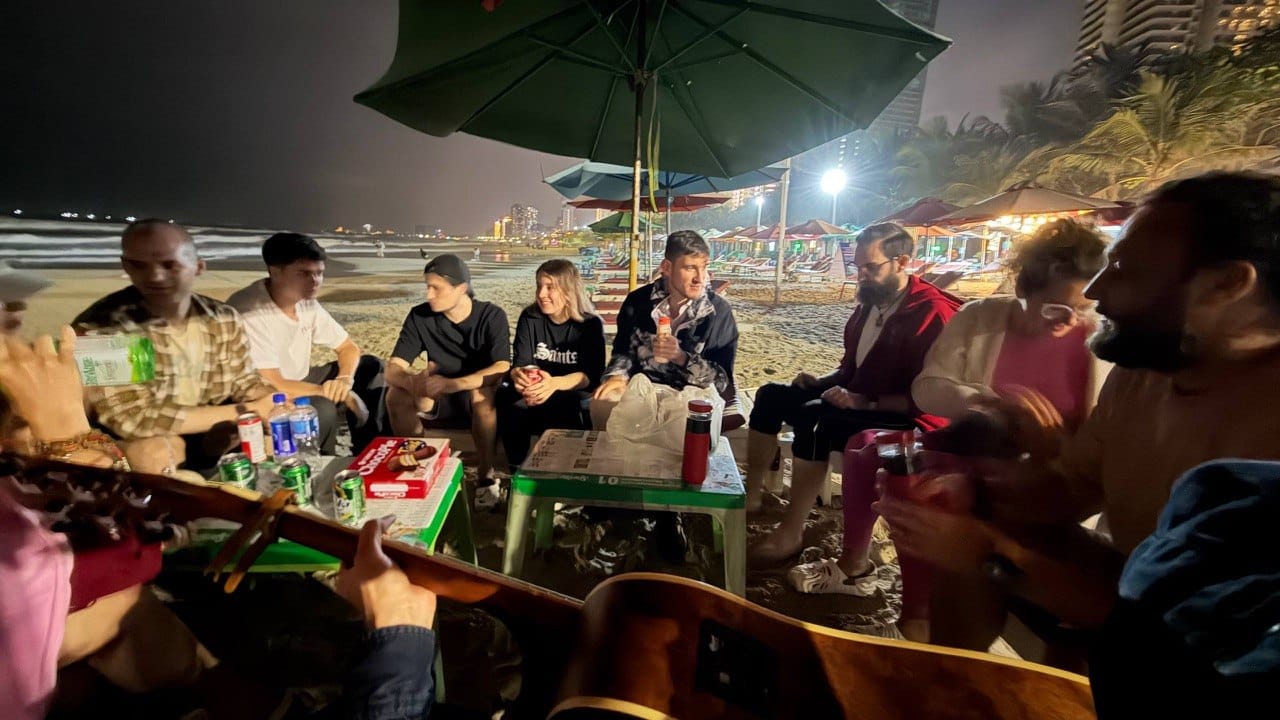
The coolest part, and the main reason why you actually want to stay here. As it happens, the Ukrainian community in Da Nang is simply huge, and many people don’t just come here as tourists but have been living here for years. This allows you to form normal, deep relationships without worrying that a new acquaintance will vanish from your life by next weekend.
Besides its scale, the local community turned out to be incredibly friendly. People organize some kind of activity every single day.
- Sports (volleyball, pickleball, tennis, surfing, hiking, yoga)
- Board games (our group literally takes over an entire restaurant in the city center—two floors, twenty tables with various games).
- Business meetups, tea ceremonies, all sorts of mindfulness meetings.
- Bike trips into nature. Our record in February was a convoy of 80 bikes to waterfalls and rice fields. The locals had never seen anything like it in their lives.
- There are even our own raves on the beach, or every-Friday parties at the club.
And that’s just the Ukrainian community. If you want, you can find global events as well.
This contrasts sharply with my experience in Thailand, where there were also large group chats, but people were usually just passing through (tourists, especially on the islands). In three months of traveling through Bangkok, Chiang Mai, and Samui, I made fewer new acquaintances than in a single day in Da Nang.
I’m often asked what our people do here. I’d guess that more than half are remote "tech-ish" folks (programmers, QA, marketers, etc.), another portion provides offline services (yoga, fitness, vocals, psychology), and a small fraction runs a local business or lives off of various "hustles and schemes" I don't quite understand. As for me, I’m the only one here who’s unemployed :)
Budget
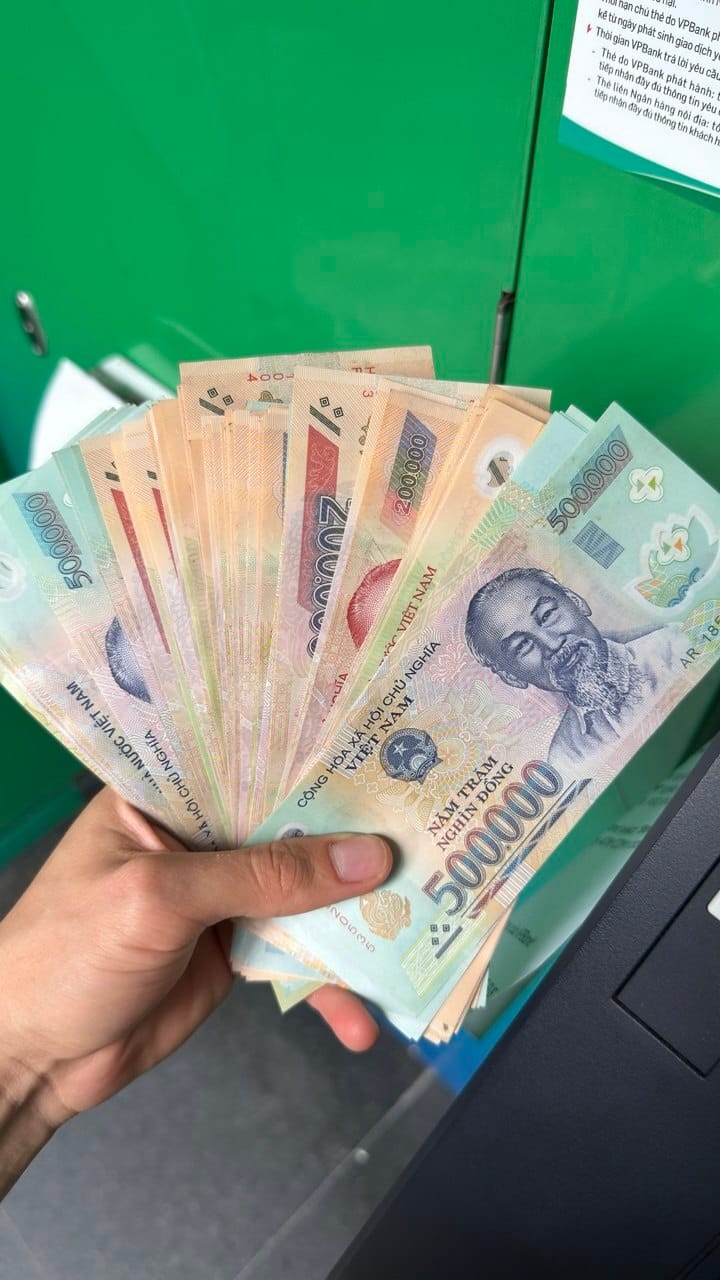
I've been tracking all my expenses for three months now, so I know exactly how much it costs to live in Chiang Mai (Thailand), Samui, and Da Nang. Realistically, I spend about $1200–1500 a month without denying myself anything at all. I eat out 3–5 times a day, rent a bike, and I’ve bought all the comforts (piano, guitar, bedding, helmet—I’ll be able to sell all of it when I leave).
Here is the approximate cost of services in Da Nang as of March 2026:
Housing
And the city isn't exactly made of rubber! The housing issue is the most pressing one for newcomers right now because demand exceeds supply, and all the landlords decided to hike up the rent by 20–30% all at once. That's what happens when bloggers hype up a "wonderful city."
- 1-bedroom/studio within 10 mins of the center: ~$350–500.
- 1-bedroom/studio within 20 mins of the center: ~$250–400.
- 2-bedroom in a "premium" residential complex: ~$1000.
Usually, people sign long-term contracts for 3 months here. Mine are no exception: my first apartment cost $300, and the second was $320. Add another $30–50 for electricity, water, and cleaning.
Those who come for a short stay usually settle in hotels—you can find something decent near the sea for $15–20 a day.
Among the unpleasant "quirks": construction, mold, and when the realtors' photos don't match reality. Da Nang is a city of construction sites; they pop up anytime, anywhere, from 7 AM until sunset. I’m actually moving to a new house right now because they’re starting to lay a foundation right behind my fence.
Food
I'm very lazy when it comes to cooking at home; my maximum is an omelet and vegetables in the air fryer. A kilogram of various vegetables from the old lady near my house costs me $1. Eggs are cheap too.
Moving on to eating out. Cafes and restaurants are on every corner here. I distinguish between touristy and local spots. I eat exclusively at local ones, simply because they’re three times cheaper. Right now, my realistic daily food budget is $10.
For example, my typical diet at local spots:
- Grilled pork with rice noodles and salad: $2.3
- Vietnamese coffee: $0.85
- Yogurt with granola and fruit: $1.3
- Pho Bo with beef in wine sauce: $1.9
- Blueberry and kiwi smoothie + 4 hours in a coworking space: $1.7
Of course, it took some time to find all these great cheap spots. They’re "local" in a sense, but their taste profiles are geared toward tourists. Because there are those truly local places where it’s also cheap, but the food is very specific (horns and hooves, chicken beaks, tons of fat, and herbs that smell like dish soap).
Also, all over the city, and especially in the center, there are European-style places or local cuisine for tourists where prices are two to three times higher—sometimes it’s justified (nice interior, English-speaking waiters, unique presentation), and sometimes it's just wild overpricing because they can.
Coffee. Vietnam is a leader in Robusta production (in Europe, everyone is used to drinking Arabica). Robusta is powerful, strong, and bitter. Taking Robusta shots straight isn't very pleasant, so the typical Vietnamese drink is coffee with condensed milk. They definitely don't skimp on the condensed milk here. Fresh milk, however, is scarce and expensive. Roadside coffee with condensed milk costs about $0.7, while a standard cappuccino in specialty coffee shops can set you back $2–4.
Other Expenses
Bike. Renting a bike from 50cc to 125cc usually ranges around $70–140 per month. I rent mine for $85, which I'm extremely happy about. More powerful and newer bikes are, naturally, more expensive.
Massage. Something around $8 per hour if it’s not VIP-luxury. But the further from the center, the cheaper; you can find it for $5 an hour—though I haven’t traveled that far yet :)
Taxi. Bikes are very cheap. It costs me $0.8 to the center and $1.5 to the airport. Basically, around $1 for a 17-minute ride. The wait time is usually about a minute! Cars are twice as expensive, and they’re often brand-new, spacious electric cars.
Medicine. I haven't had to deal with it firsthand yet, but from what I’ve heard from friends, everything is much cheaper here than in Europe. There are premium hospitals and cheap ones. Naturally, the quality of service varies, but thanks to reviews from the community, you can always find a good doctor.
Budget Conclusion
If you tighten your belt, you can live on $700 a month. I don't manage that, but that's not my goal. For $1000+, you have all the comforts: an apartment near the center, three meals a day at restaurants, your own bike, and spending for pleasure.
In Thailand, by comparison, everything is more expensive:
- Chiang Mai: roughly x1.5
- Samui, Phuket: x2
- Bangkok: highly dependent on the area, but let's say x2
Culture, Language, and Safety
I like the Vietnamese. Generally, being here is much more pleasant than in Thailand. It’s night and day. There are actually two polar camps—some like Thailand more; it’s a matter of taste and personal preference.
They are very kind people. In all my time here, I haven't been in a single conflict! No shouting, no arguments, no fights. Of course, it’s not quite the "sabai-sabai" you get in Thailand where everything is relaxed and smiley, but it feels even more comfortable knowing a Vietnamese person's smile is likely genuine rather than just polite.
Keep in mind that Vietnam is a poor country with below-average income levels. Local workers, taxi drivers, and the elderly live on pennies and eat rice. Tourists often don’t see this poverty because you have to go outside the city's tourist-gastronomic zones to find it.
Despite the widespread poverty, my subjective feeling is that it’s absolutely safe here. For men, definitely. Just like in Thailand, by the way. I don’t remember feeling afraid during a night walk even once in the last six months. In Europe, it’s sketchy to walk into a narrow alley even during the day... The most crime I've heard of here is phone or bike helmet theft. And then there's tourists or locals hitting on girls, but that’s a global problem.
The attitude toward alcohol turned out to be quite interesting to me. Yes, the Vietnamese like to have a beer after work, just like in any other country. But in all my time here, I haven’t met a single drunk, stumbling, or inappropriately behaving Vietnamese person. It feels like after drinking with friends, they just quietly go home.
The Vietnamese language is completely incomprehensible, even though it’s written in Latin script. Because of the tonal system (like in Chinese, for example), it’s pretty much impossible to read anything without knowing the rules. Aside from "hello," "thank you," and "beef soup," I don't know a thing. On the bright side, everyone uses translators, so we communicate comfortably in real-time.
Vietnamese people who don’t work in the tourist service industry usually don't speak English—sometimes they don't understand a single word. Again, with a translator, it's not an issue, even if the translation into Vietnamese is sometimes clunky and inaccurate. Often, sign language and a game of Charades come into play.

Downsides of living in Vietnam
First downside: The weather. Right now, it’s gorgeous. But summer is coming soon, and the temperature will rise to 35-40°C. Combined with high humidity, moving around the city during the day won't be very comfortable. That’s why I’m already shifting my wake-up time—it's 8 AM for now, but with the perspective of waking up closer to 5 AM in the future. Sunrise here is exactly at 5 AM, and the temperature at that time is very, very pleasant.
And then there's the rain. I arrived in January, just as it was ending. Usually, in the fall, there are vicious typhoons where it can rain for days without stopping, and the rainy season lasts from September to December. They say this past fall was abnormally dry (meaning instead of 4 months of rain, it only poured for one :)), but I’m preparing for the worst and honestly think it makes no sense to torture myself by staying here in the fall! As far as I know, many expats scatter during that time too: Bali, Sri Lanka, Thailand, etc.
Second downside: Sidewalks. They don't exist. Throughout Vietnam, sidewalks are just parking spaces for bikes. Any walk through the city (except for the waterfront) is a walk along the roadway. Overall, you just have to get used to constantly looking in all four directions so you don't get hit by a passing bike or car.
And speaking of bikes—the driving here is very specific, especially compared to Thailand. At any intersection, you have to look all four ways so you don't accidentally end up in the hospital :) The only traffic rule everyone actually follows: whatever is in front of you is your problem; whatever is behind you is not.
Also, interestingly—no one ever lets pedestrians pass at crosswalks. It’s baked into their DNA. You either wait a few minutes for a gap or confidently weave your way through the flow of bikes.
Third downside: Noise. As I already mentioned, construction projects pop up unpredictably and anywhere. Because of this, many houses are practically uninhabitable. Lots of dust, debris, and workers carrying iron rebar on their bikes. Generally, it visually spoils the aesthetic of a resort city.
Also, Vietnamese people absolutely love karaoke. It was especially fun during the local New Year, when I counted 14 street karaokes during a single evening walk. They sing loudly and off-key, but they damn well love it, especially men over 40 :) They sing everywhere—from Da Nang to Ho Chi Minh City, in every roadside cafe, at weddings, at birthdays, with or without a reason.

Trip from Da Nang to Ho Chi Minh City
We had one bike, two raincoats, and a whole lot of courage! We covered 1,700 kilometers through these cities:
- Kham Duc
- Kon Tum
- Mang Den
- Pleiku
- Buon Ma Thuot
- Da Lat
- Ho Chi Minh City
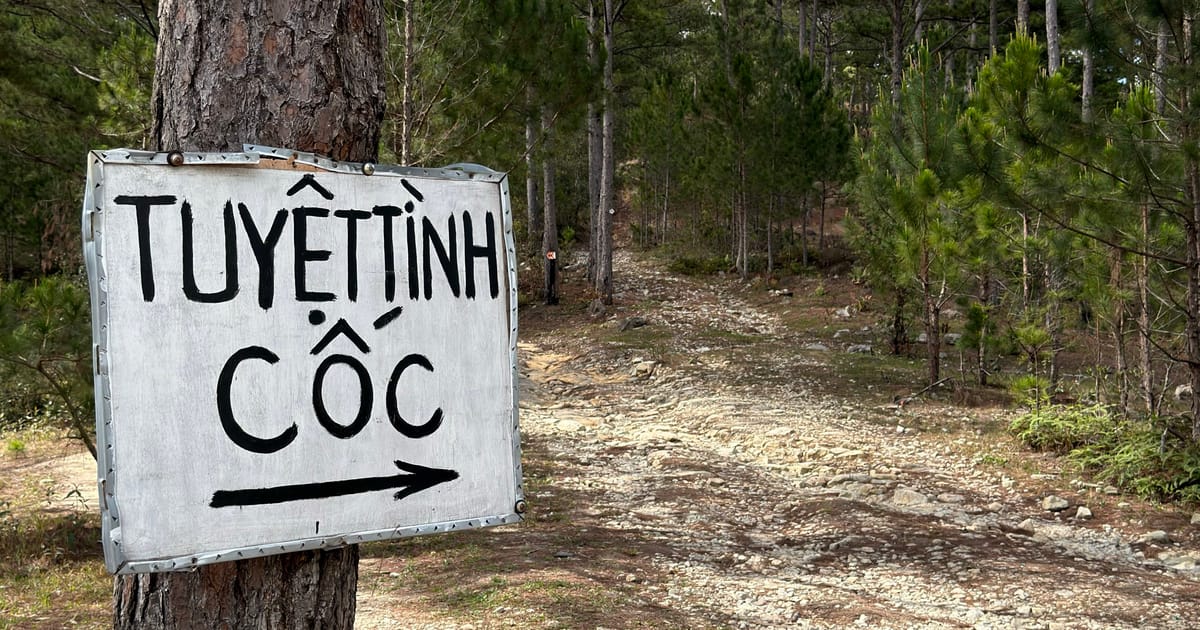
With zero planning horizon whatsoever, we literally decided where we were going the next day overnight. We rode through several climate zones: mountain passes, pine forests, semi-steppe wastelands, rice fields, and coffee farms. Overall, we got lucky with the weather—we only got caught in the rain twice during the two-week trip.
Both ChatGPT and my friends warned me that the road was quite dangerous—claiming there were sections with broken asphalt, that the bike could break down on a mountain pass, or that you could lose control on a dusty, dirty road. In reality, it wasn't that hard. We swapped places every half hour to an hour (one bike for the two of us), as the hardest part is sitting in the passenger seat for long hours.
We rode a Honda PCX 150cc—not the best choice, but we took what we could find. It was tough to find a rental place that would let you do a one-way trip with a decent bike (pick up in Da Nang and drop off in Ho Chi Minh City). That rental cost $240 for 11 days, and it was the cheapest I could find in the city.
The coolest spots from the entire trip:
- The mountain pass along the Laos border between Kham Duc and Kon Tum—the nature there is just stunning. Green mountain jungles, a semi-broken road, a river flowing below, and buses hurtling toward you in the opposite lane.
- Da Lat and its surroundings. It's a unique city—it's up in the mountains, so it's always cool and a bit overcast there. The nature is incredible: pine forests, lakes, and waterfalls. Unfortunately, almost no one lives there permanently, so like any other small city, it’s only suitable for those who don't have a strong need for active social connections.
It probably would have been cooler to ride the Ha Giang Loop—through the mountain hairpins north of Hanoi. But fate brought us here, and we don't regret it at all. If anyone decides to go on a trip like this—hit me up, and I'll share some tips.
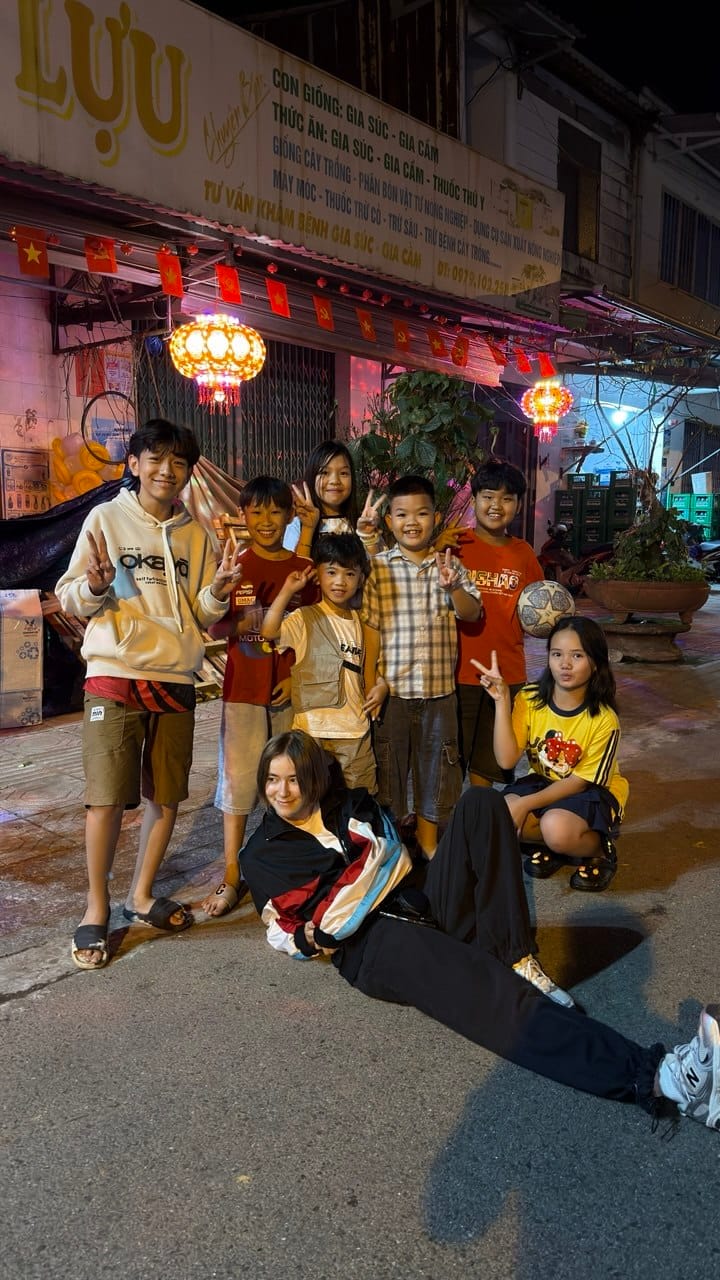
Thanks for reading, and see you next time! All the photo reports are on my Instagram: https://www.instagram.com/vlad.khitov/